













Encounters on
Ipponsugi Street

Ipponsugi Shopping Street

Ipponsugi
Shopping Street

Trip Menu

Why not design a special itinerary that allows you to see, hear, and experience the history, culture, and daily lives of the people of Ipponsugi Street? The street's charm lies in the encounters with the people and the culture where “tradition” and “the present” intersect. Strolling along in this website, we will introduce you to a variety of hospitality experiences, including workshops and tours revealing the stories behind traditional crafts and cuisine, as well as events showcasing the unique flair of the young owners. Your journey begins by contacting the shops directly with any questions or to make reservations. Wonderful encounters are born from the space left by a schedule that isn’t too packed. 
Here, we present shops for which OKADA ARCHITECTS was involved in the building design.
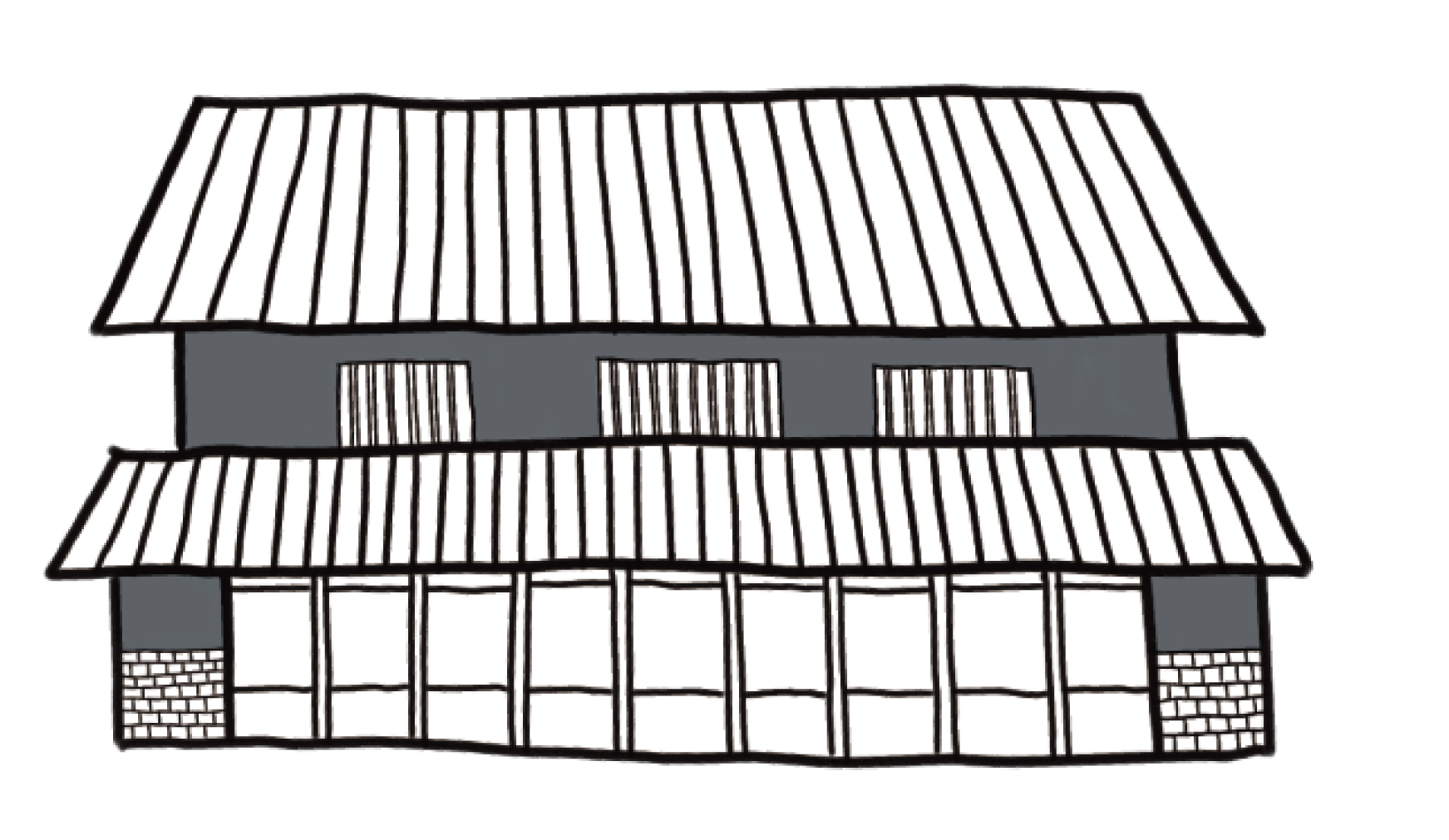
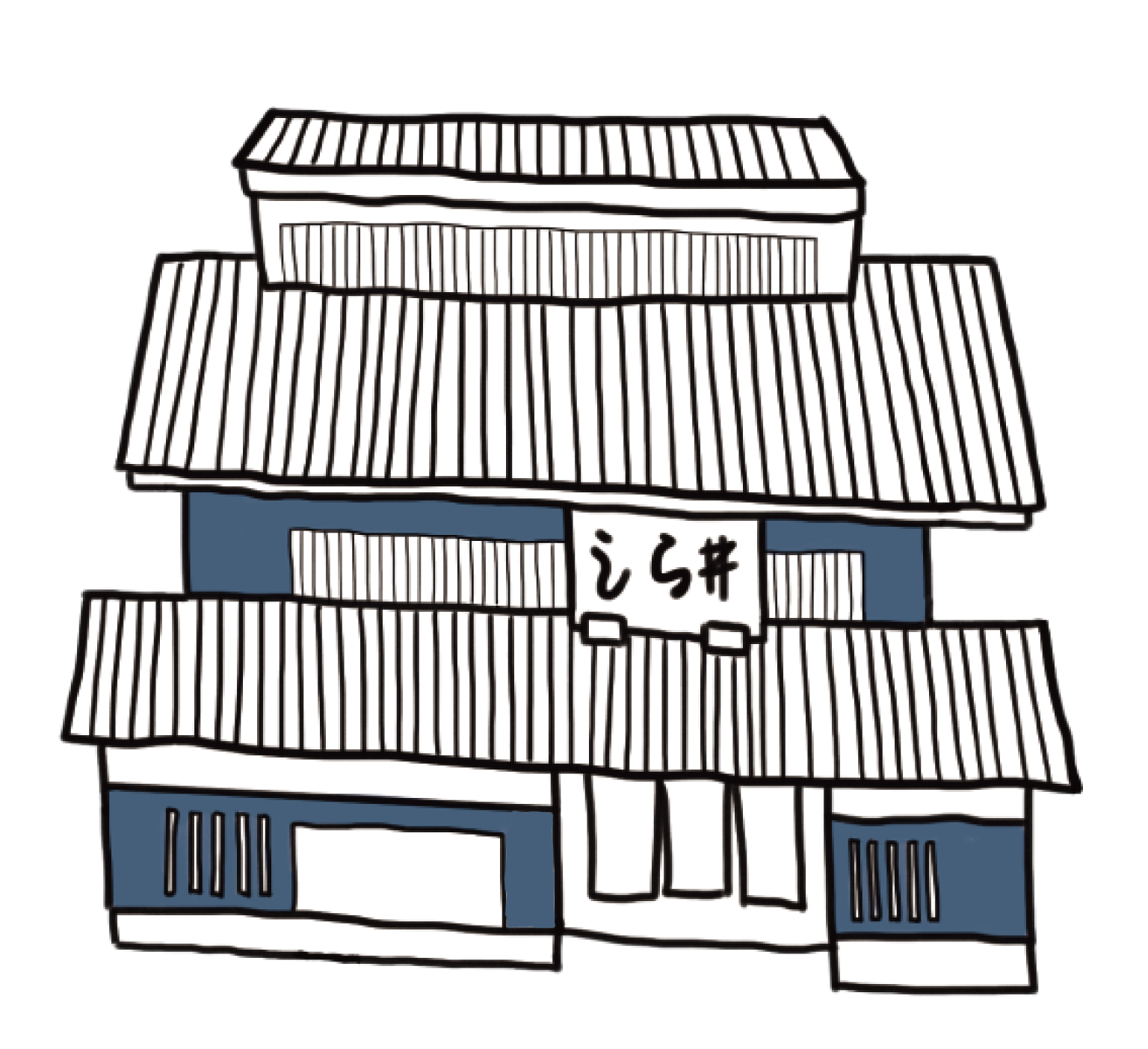
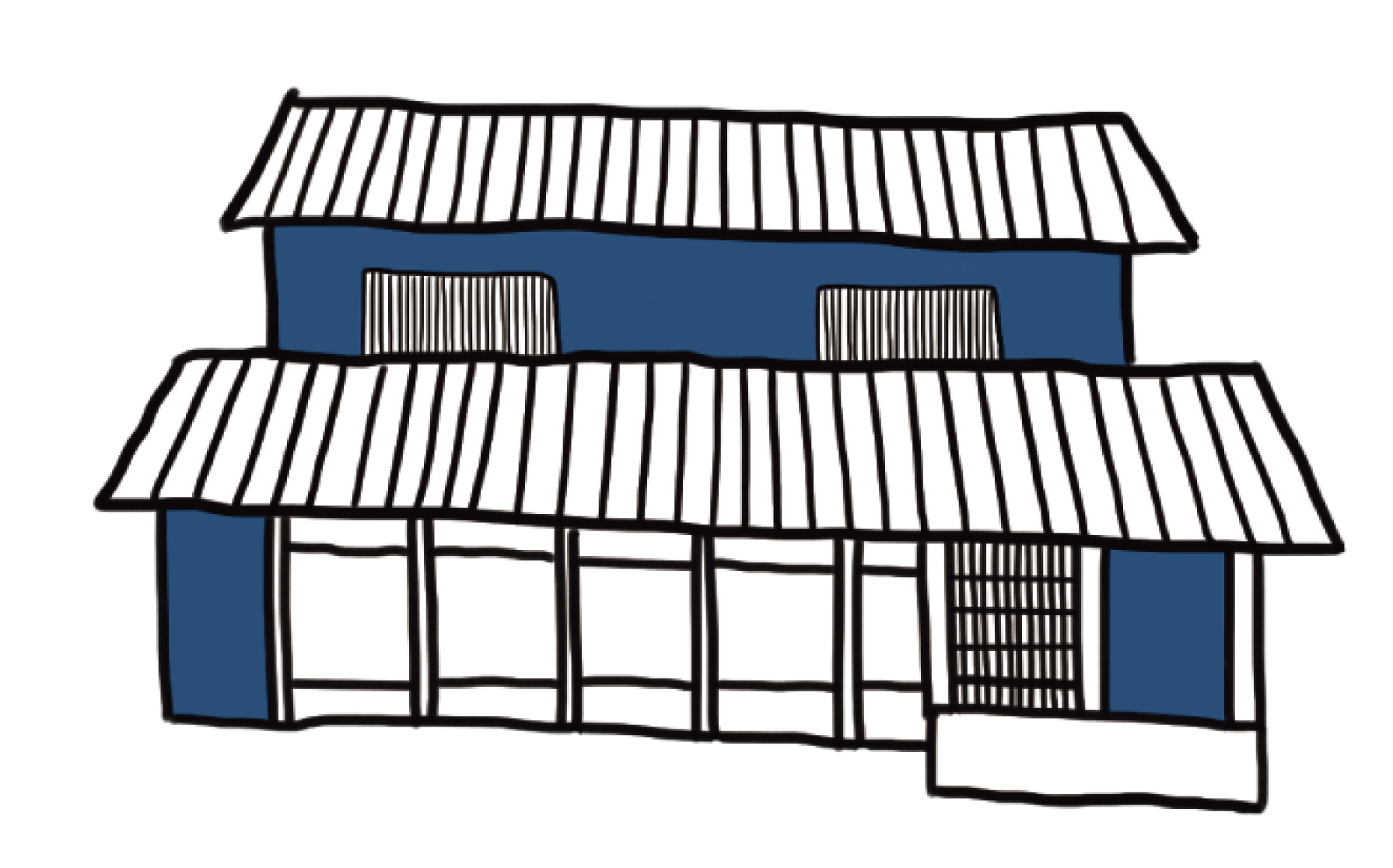
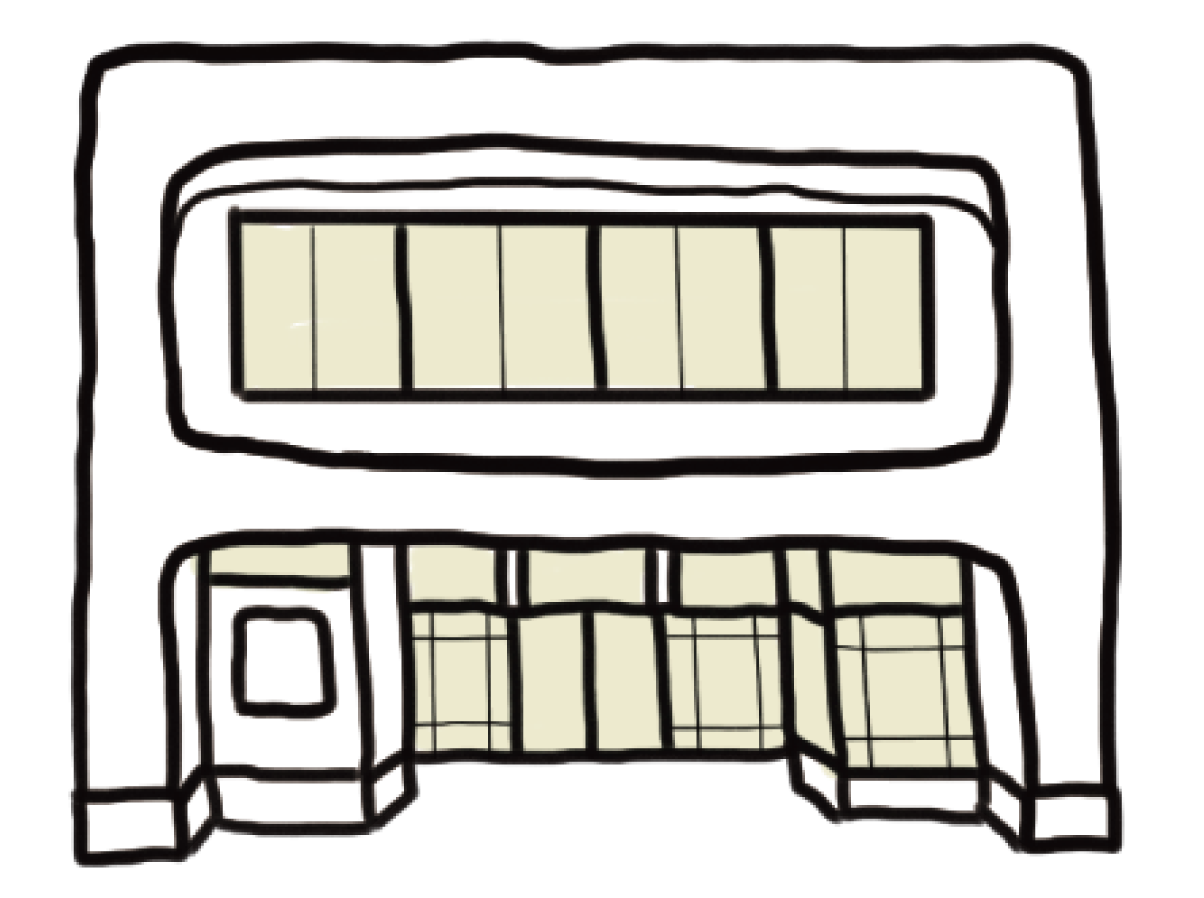
Click on the buildings that catch your eye in the illustrations below to take a peek inside the shops.

https://shotaro-okada.com
Shopping
Hotels
Experience
Visit
Food

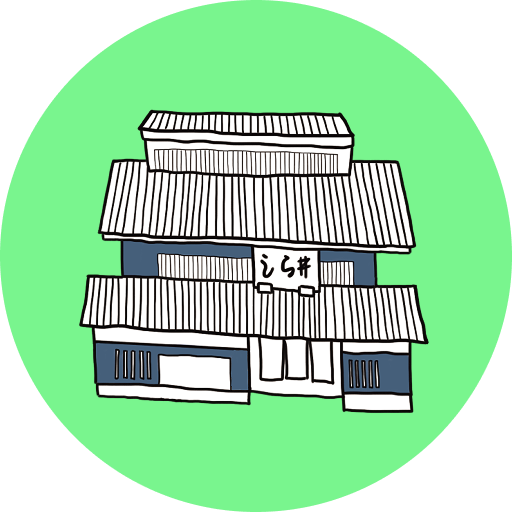
SHIRAI
A Shop Specializing in Kelp and Seafood

While walking down Ipponsugi Street, I came across an exhibition at the "Town Corner Gallery" and found myself stepping through the noren curtain. SHIRAI is a shop that specializes in kelp and seafood. Thirty-five years ago, the Shirais converted part of their spacious store into a gallery to provide a venue for artists to showcase their work in fine art, crafts, and handicrafts and connect with one another.

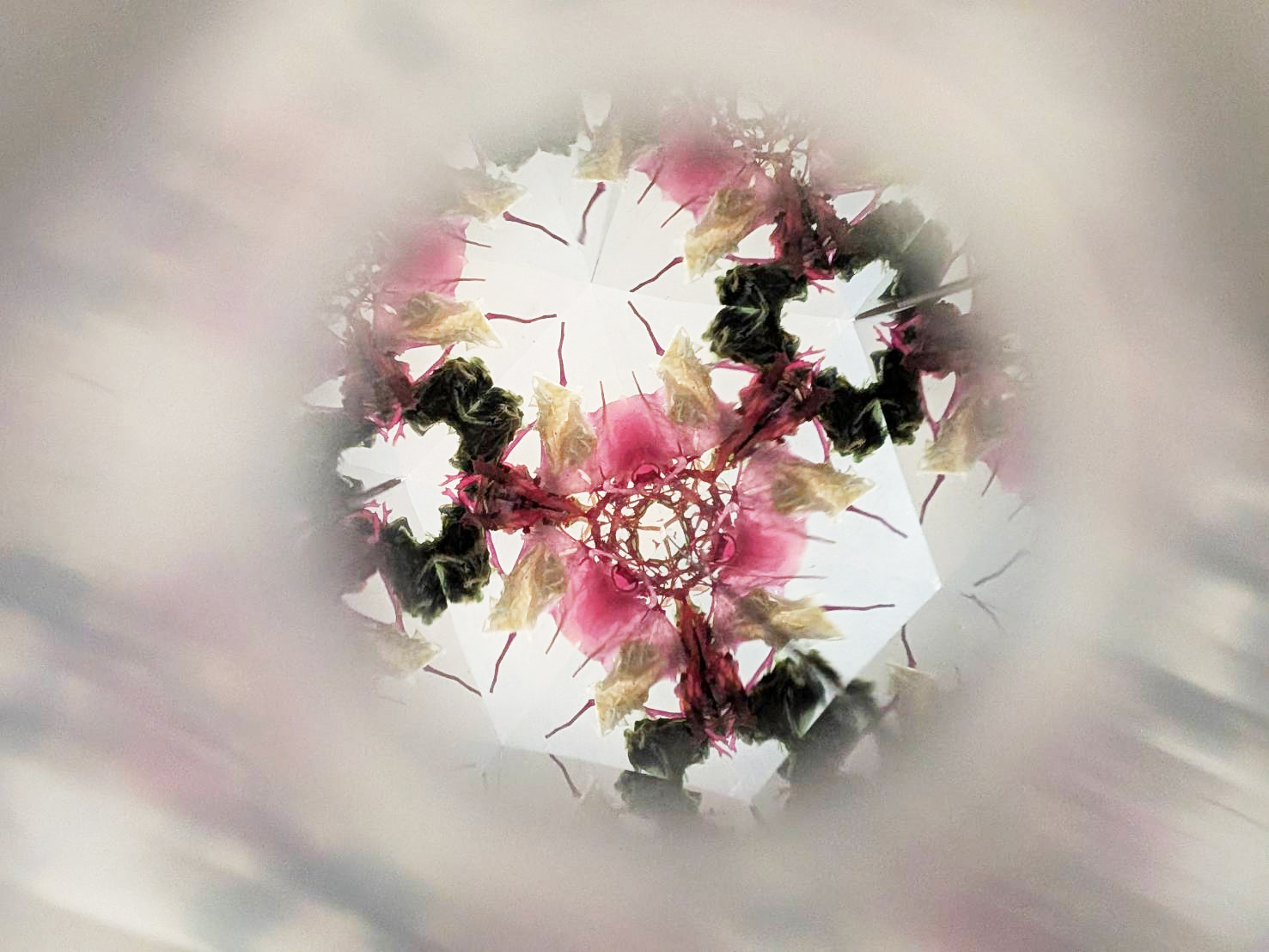
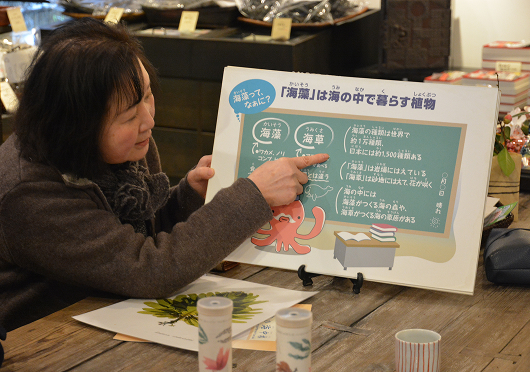
Another important activity for the Shirais is sharing the charm of seaweed and the ocean. Among these, the workshops held at the shop on Ipponsugi Street are particularly special. In these workshops, participants create "oshiba" (pressed seaweed art) and kaleidoscopes using colorful seaweed harvested from the waters of Noto.
You will find yourself increasingly drawn into the rich world of seaweed you never knew existed when you realize, "I never knew seaweed could be this beautiful!"
Conversations expand from the wide variety of seaweed to marine ecosystems and even the relationship between forests and the ocean.

As I listened to Ms. Shirai's stories and enjoyed the seaweed art, I found myself thinking about the Earth.
  • SHIRAI (A Shop Specializing in Kelp and Seafood)
  • SHIRAI (A Shop Specializing in Kelp and Seafood)

ICOU

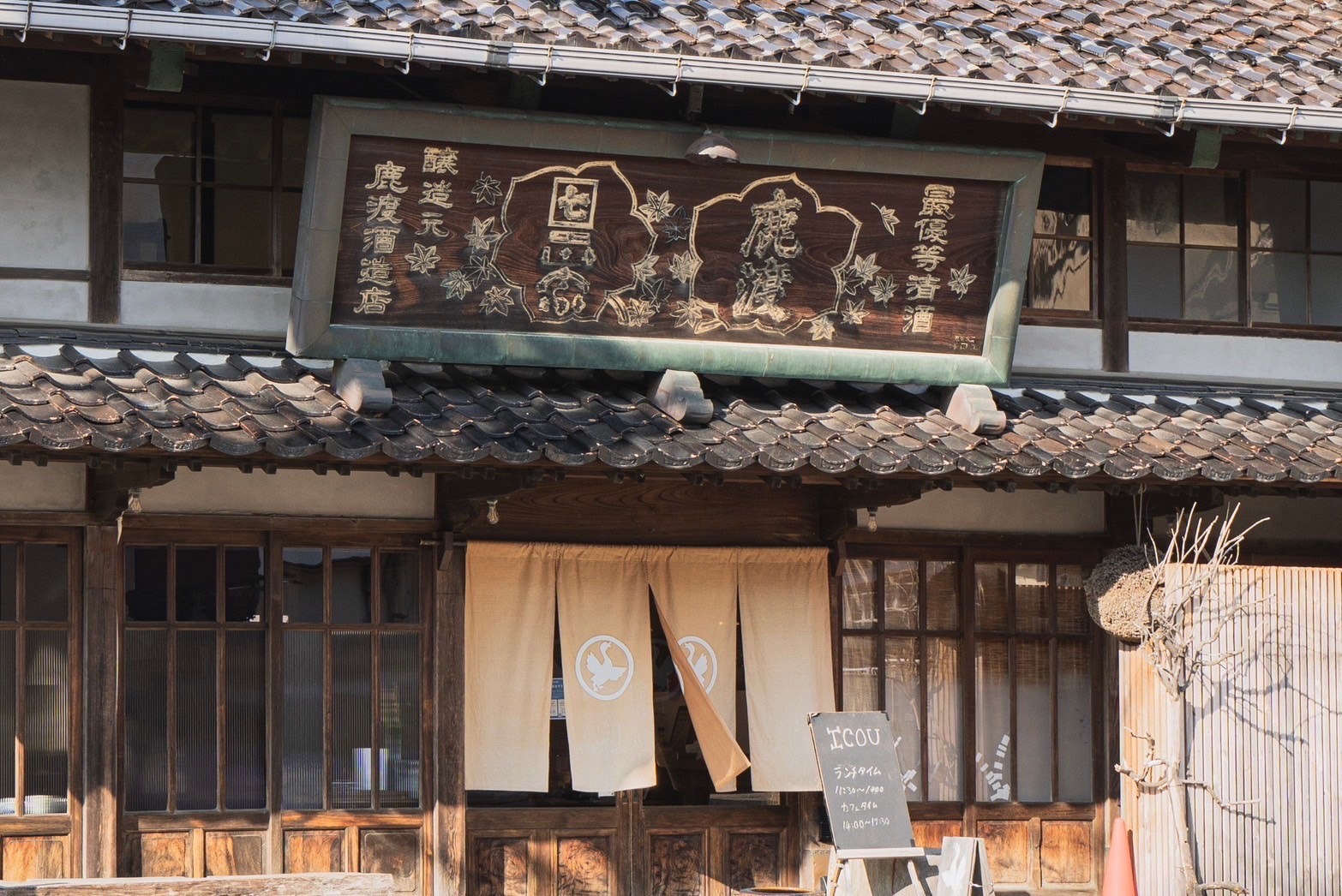
This traditional Japanese-style café is known for its striking sign, featuring gold lettering that reads “Top-Grade Sake,” “Brewery,” and “Shikado Sake Brewery,” set against a backdrop of swirling maple leaves.

Renovated from a building constructed in 1907, this café was once a popular spot that was always bustling with customers. 

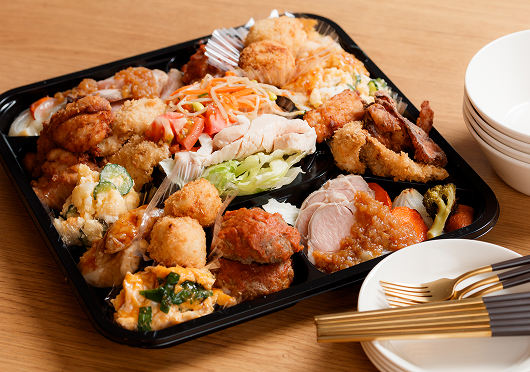
Since being damaged in the Noto earthquake, the café space has been closed, but if you make a reservation, you can still order takeout dishes such as appetizer platters.

The owner, Ms. Shirofuji, was born in Nanao and returned to her hometown after having a child. She calls herself “Dreaming Girl,” and decided she wanted to “do something” after returning to Nanao. She enrolled in an entrepreneurship course, where she learned about the old brewery building.  Despite the property being vacant for a long time and the renovations being a huge undertaking, and despite being told it was like taking on a wayward son, she decided to take on the challenge.

“What makes me glad I’ve run this café for 11 years is that customers come in and share their memories of when this was a liquor store. It made me realize that this building isn’t just mine, but it is a shared treasure in everyone’s hearts,” Ms. Shirofuji says. I look forward to the day when I can enjoy a leisurely cup of tea in that café  with its special atmosphere one again.

  • ICOU
  • ICOU

SHIROUMA CURRY

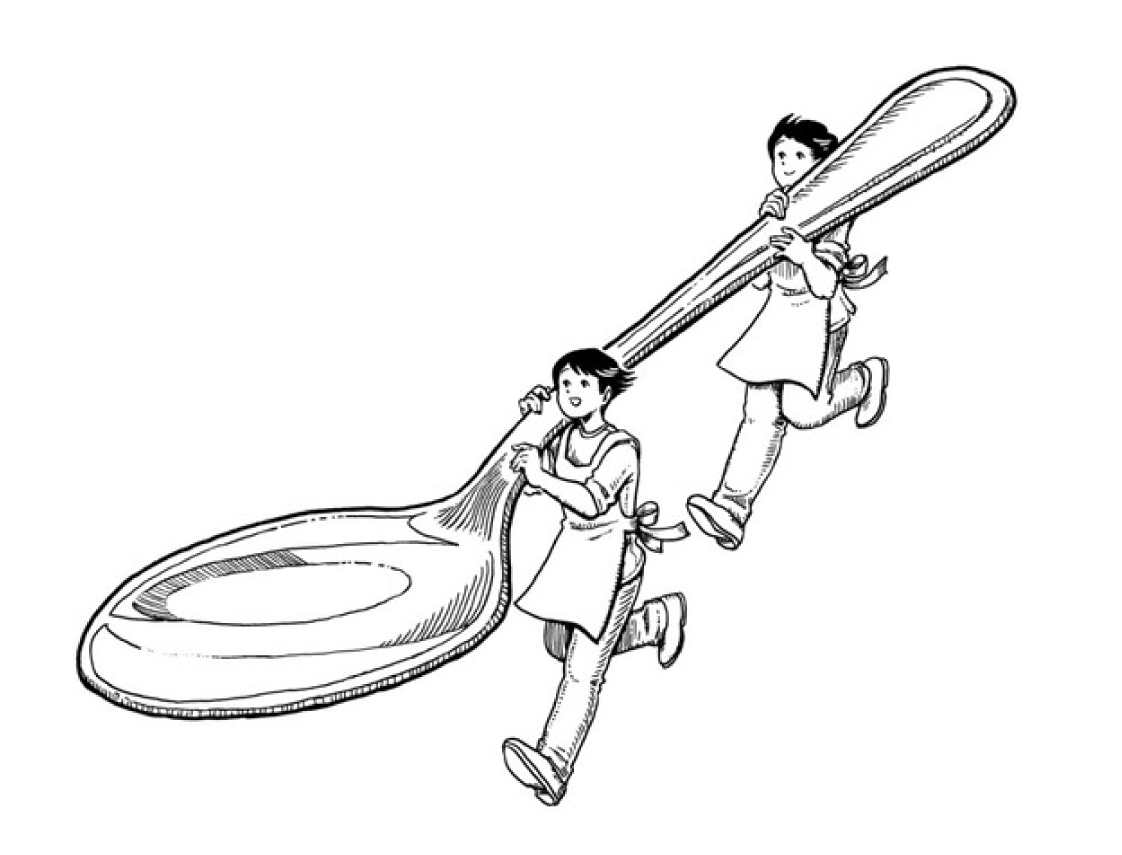
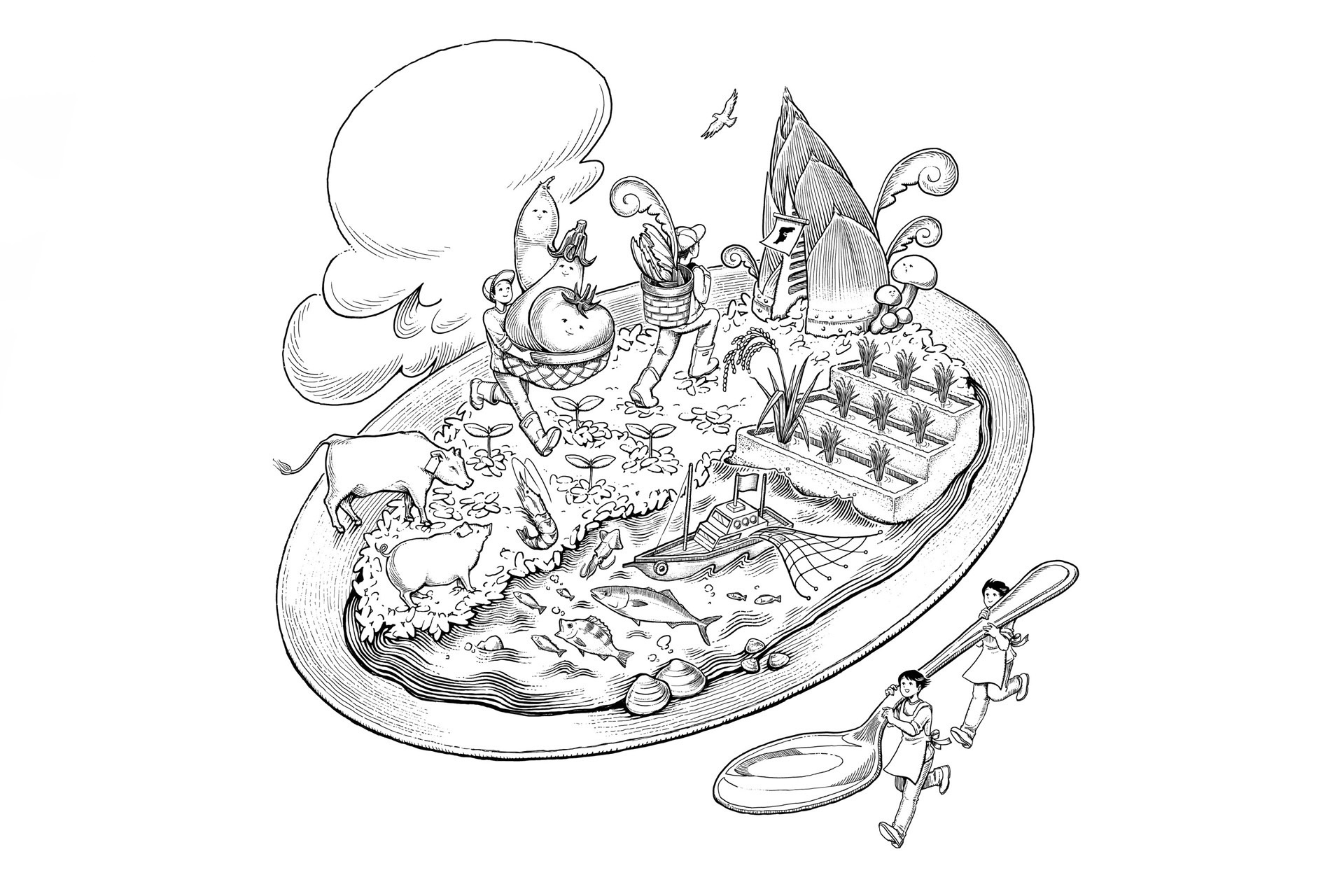
There is a whimsical illustration at the entrance. The unique world depicted on the giant curry plate is truly one of a kind. A farm and the sea are visible, and bracken and mushrooms grow around a bamboo shoot house.  Rice grows in fields that look like flower beds, and cows, pigs, and shrimp roam the meadows. In the sea, there are fishing boats, fish, squid, and clams… and carrying a basket full of vegetables and wild vegetables is the owner, Mr. Morisaki. Two people carry in a giant spoon. Now, please enjoy this story served on a plate.

These unique illustrations embody the very essence of SHIROUMA CURRY's world, so perhaps no further explanation is needed. Why not enjoy his original spice-infused dishes while listening to Mr. Morisaki, who also runs a farm, talk about his time studying in Taiwan and his passion for agriculture and food?

  • SHIROUMA CURRY
  • SHIROUMA CURRY

TORII SHOUYU

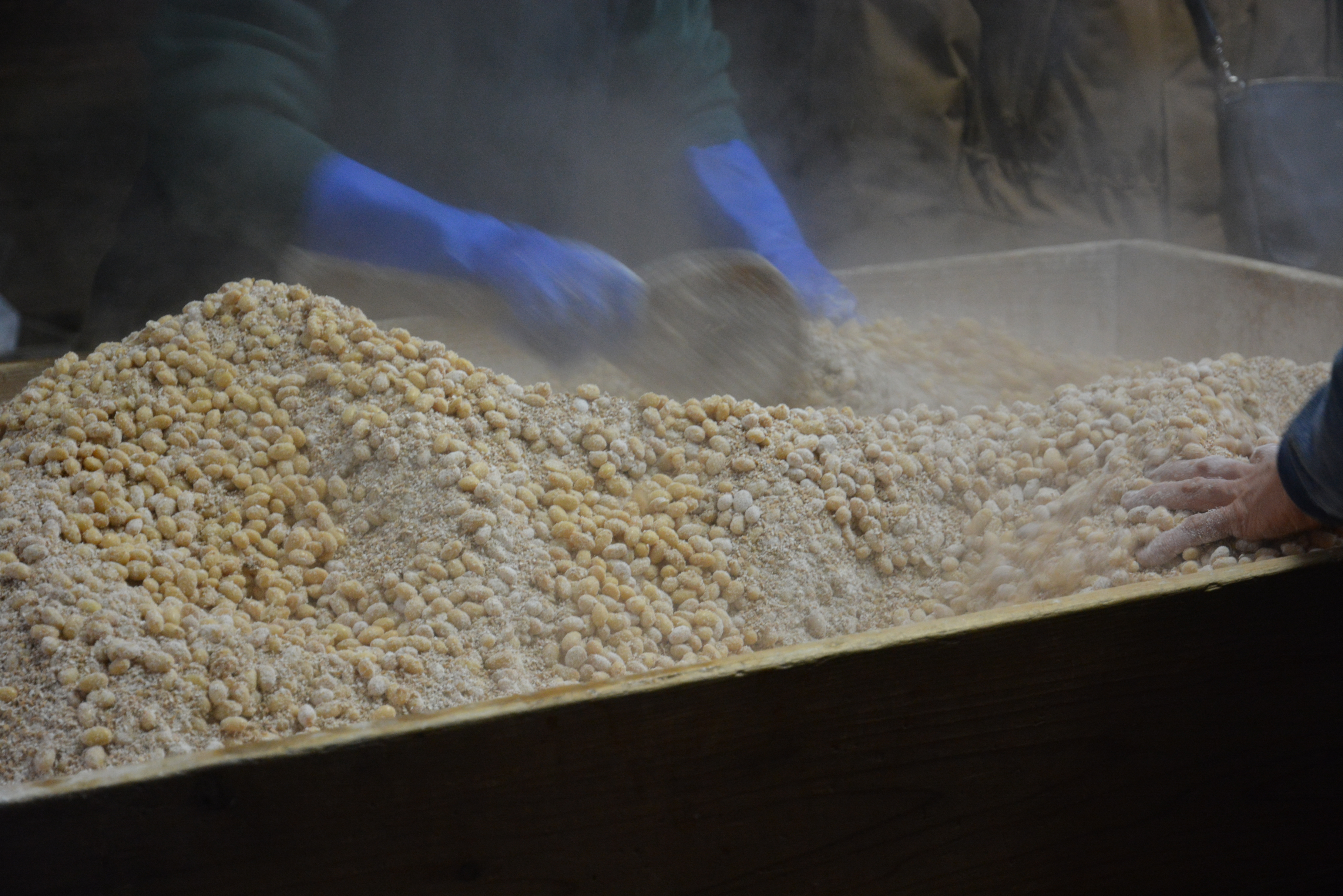
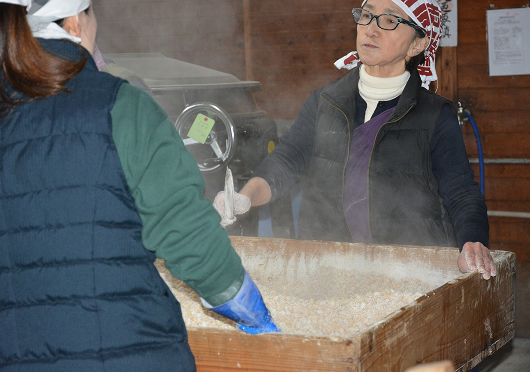
When I visited the shop at the end of January, the shop was  right in the middle of the soy sauce brewing process. They spread the freshly steamed, soybeans on a table, added roasted wheat and koji spores, and worked together as a team of two to mix it all vigorously to make the koji. Right next to them, another person was simultaneously roasting wheat in a large pan, and once it was done, they added it to the steamed soybeans. The three workers' well-coordinated movements were impressive.

Without pausing her work, Ms. Torii spoke to me about soy sauce ingredients and production methods, the koji mold, the history of the shop, and her feelings about the town. The entire process is done by hand, without the use of machinery. Fermentation progresses as invisible living organisms, such as koji mold work diligently to create soy sauce with a unique flavor and aroma. Ms. Torii says that the power of the hands is transmitted to the ingredients to create the soy sauce. She seemed as though she were carefully crafting the soy sauce by hand, touching the living ingredients and invisible microorganisms.

  • TORII SHOUYU
  • TORII SHOUYU

Kokubu

coming soon

TAKAZAWA CANDLE

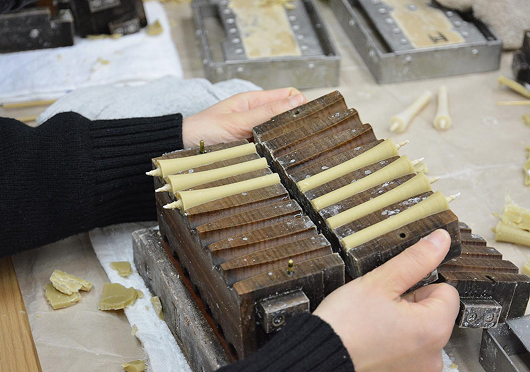
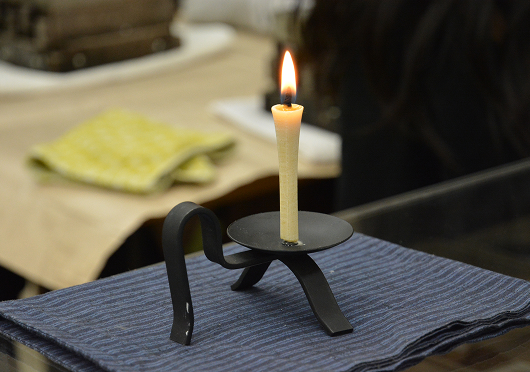
The Takazawas told me that many people love the moment when a traditional Japanese candle burns down and extinguishes itself. The idea of savoring that fleeting transition from “on” to “off” felt refreshing to me. When I actually tried it at home, it was a truly wonderful experience.

By participating in the “Traditional Japanese Candle Making Workshop” and making a candle with my own hands, I learned a lot. Since the wick is the heart of a Japanese candle, and once you learn that it is made from special materials with a unique structure, the gentle transition from the flame burning to it going out feels like a truly special moment. It is an indescribable sensation. It is a feeling that one that can only be understood by visiting Nanao, immersing yourself in the local culture, meeting the people, and making a Japanese candle yourself.

  • TAKAZAWA CANDLE
  • TAKAZAWA CANDLE

URUSHITOUHO ARAKI

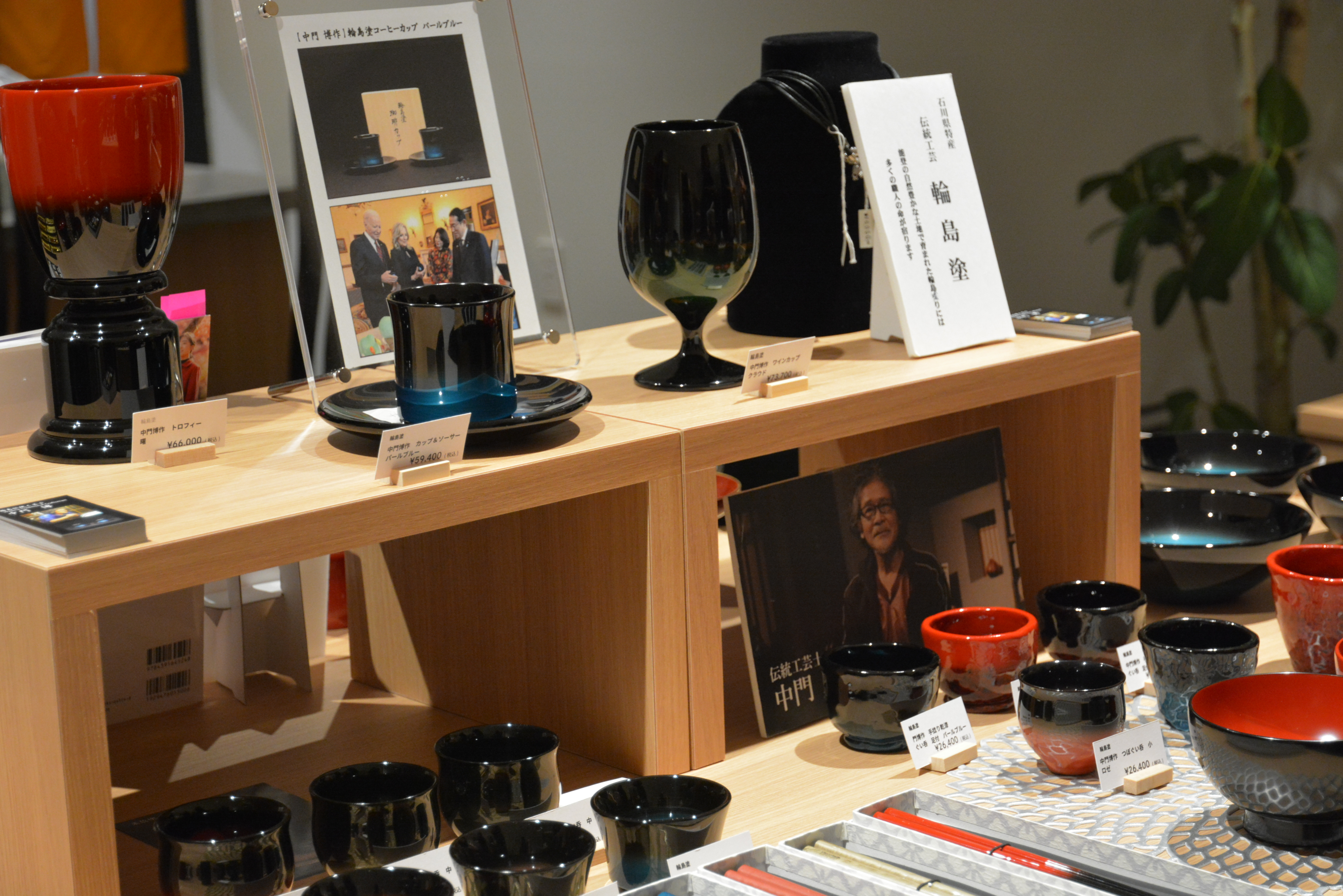
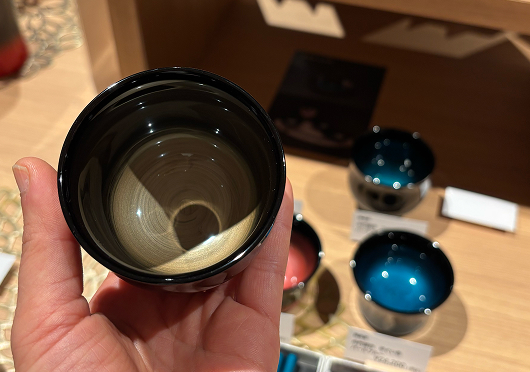
When you tilt a lacquered cup, a  moon gently appears at the bottom. It may resemble either a full moon or a crescent moon. Araki’s shop features a selection of Wajima and Yamanaka lacquerware  and Kutani pottery, traditional crafts that represent Ishikawa Prefecture.

These pieces possess a special charm that feels deeply human. They are selected through dialogue with artisans with whom the shop has maintained a relationship since the previous generation. This moon-themed sake cup is a masterpiece crafted by Hiroshi Nakakado, a Wajima Traditional Craftsman. He applied a pearl blue finish reminiscent of the deep Noto  Sea in his own unique style. The Arakis shared that they were inspired to recommend this cup when a customer visited the shop one day expressing a desire for a sake cup through which one could see the moon. Although it does not depict a specific image of the moon. It certainly evokes a rich image of the moon in the viewer’s mind.

Through the decorative elements of traditional crafts, unexpected encounters between artists and customers are born. At the Arakis shop, you can experience “chinkin,” a traditional decorative lacquerware technique.

  • URUSHITOUHO ARAKI
  • URUSHITOUHO ARAKI

TORI TO MATSUBA

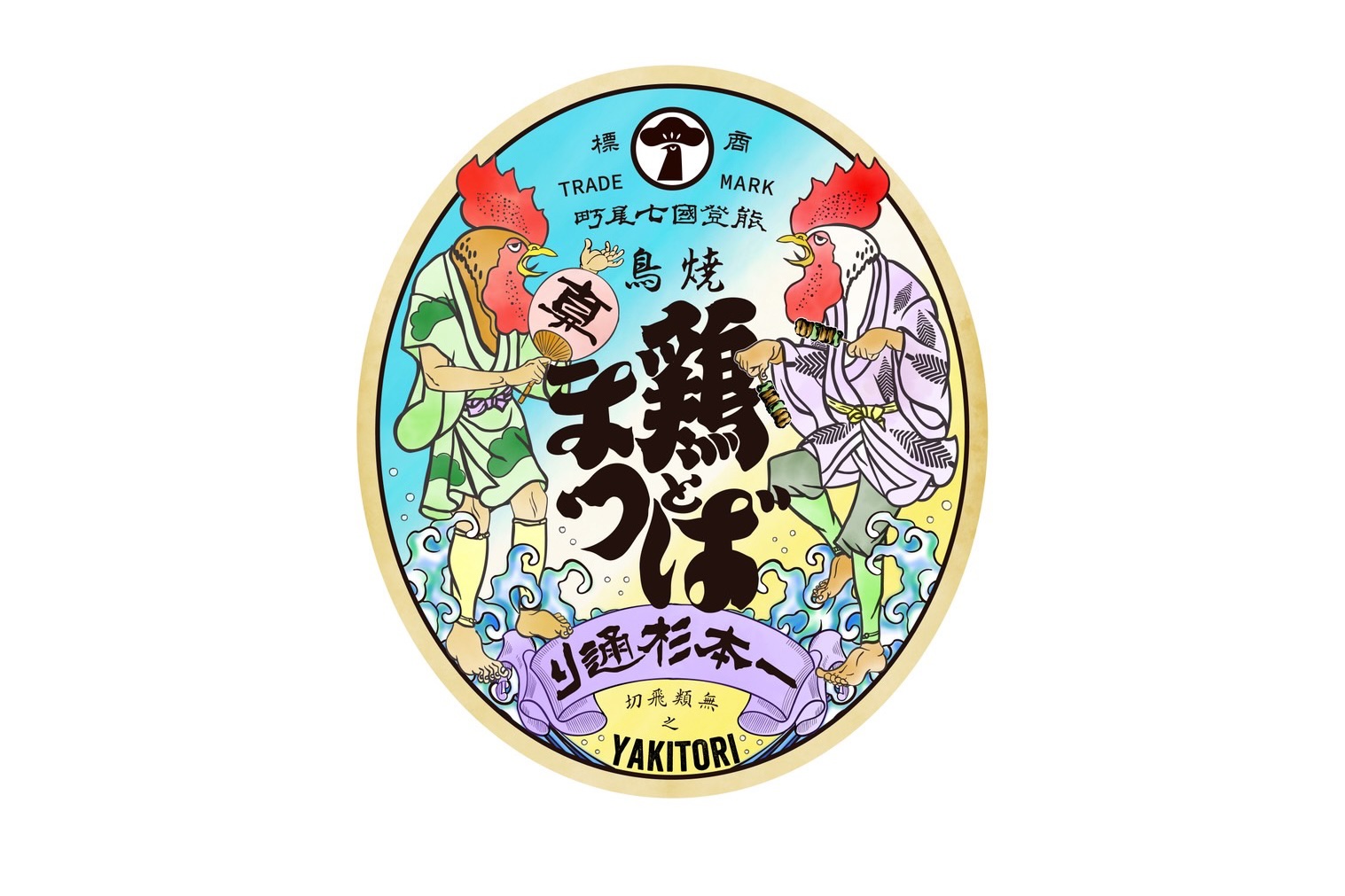
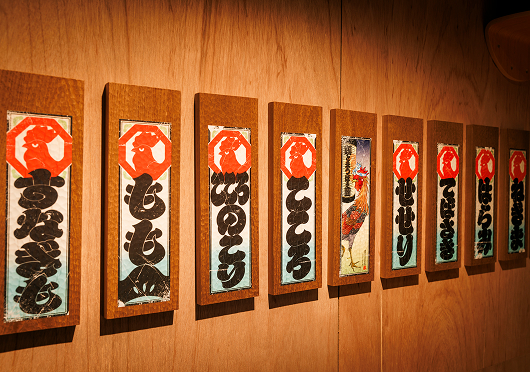
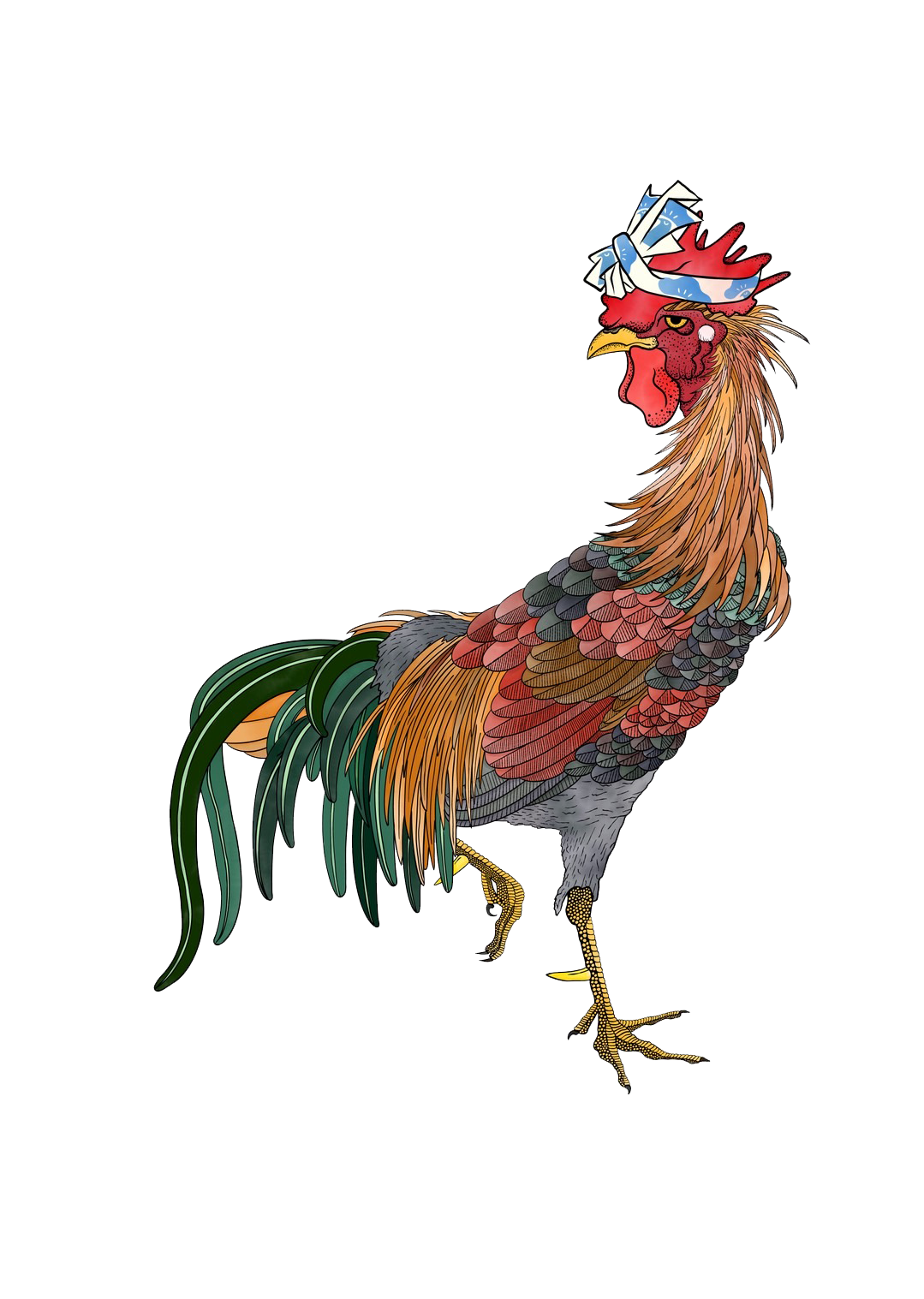
The shop’s logo is a rather quirky-looking chicken holding a yakitori skewer. This highly detailed and distinctive graphic design is unforgettable. Mr. Matsubayashi, the owner, is originally from Kanazawa. He used to work in the apparel industry in Tokyo. He moved to Nanao 10 years ago and opened the restaurant . His exceptional taste which defies description shines through in everything from the signboard and noren curtain to the menu posted on the wall and even the design of the can badges.

There aren’t many yakitori restaurants  other than traditional red-lantern imbis,  so he opened this restaurant hoping to offer something different. When the ARAKI, a lacquerware and pottery shop on Ipponsugi Shopping Street was set to be rebuilt, a serendipitous opportunity arose, and he moved his restaurant to the second floor.

The food is undeniably delicious,  and he says his desire has grown to go beyond that to connect Nanao’s  people from different industries in Nanao to make the town a more enjoyable place together. 

Mr. Matsubayashi himself didn’t initially feel the need to publicly declare his desire to  contribute to the town. He seemed to be doing things freely. However, after the earthquake, his perspective changed, and he shared many ideas with us about supporting young people and revitalizing Nanao.

  • TORI TO MATSUBA
  • TORI TO MATSUBA

Room design hotel

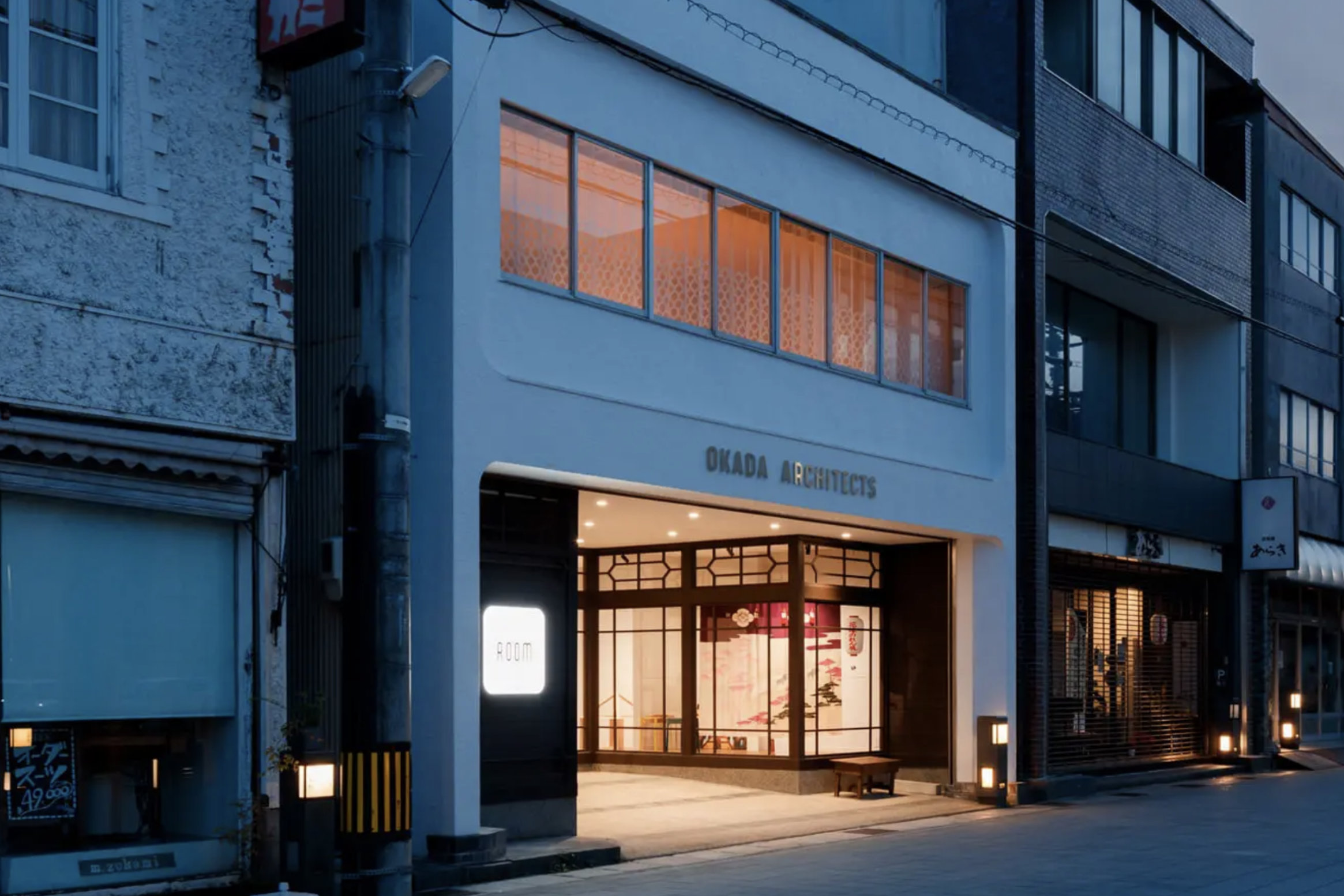
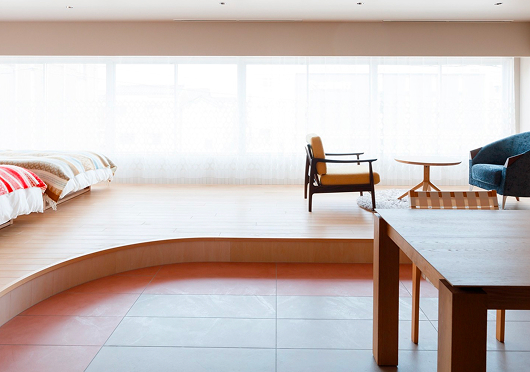
The Room design hotel is a design-focused hotel operated by the OKADA ATCHITECTS. We launched this site because we, two former university classmates who studied architectural design together, wanted to offer guests the chance to experience daily life on the Ipponsugi Street while staying in an extraordinary space.

In this section, titled “Encounters on Ipponsugi Street,” we provide information about our “Room design hotel” and introduce Ipponsugi Shopping Street’s shops from a local perspective. Our goal is to help you have encounters with people and culture, providing an experience beyond ordinary sightseeing, so that you can feel at home in this town. We would be delighted if you visited again and again and continued to take an interest in this town. 

  • Room design hotel
  • Room design hotel

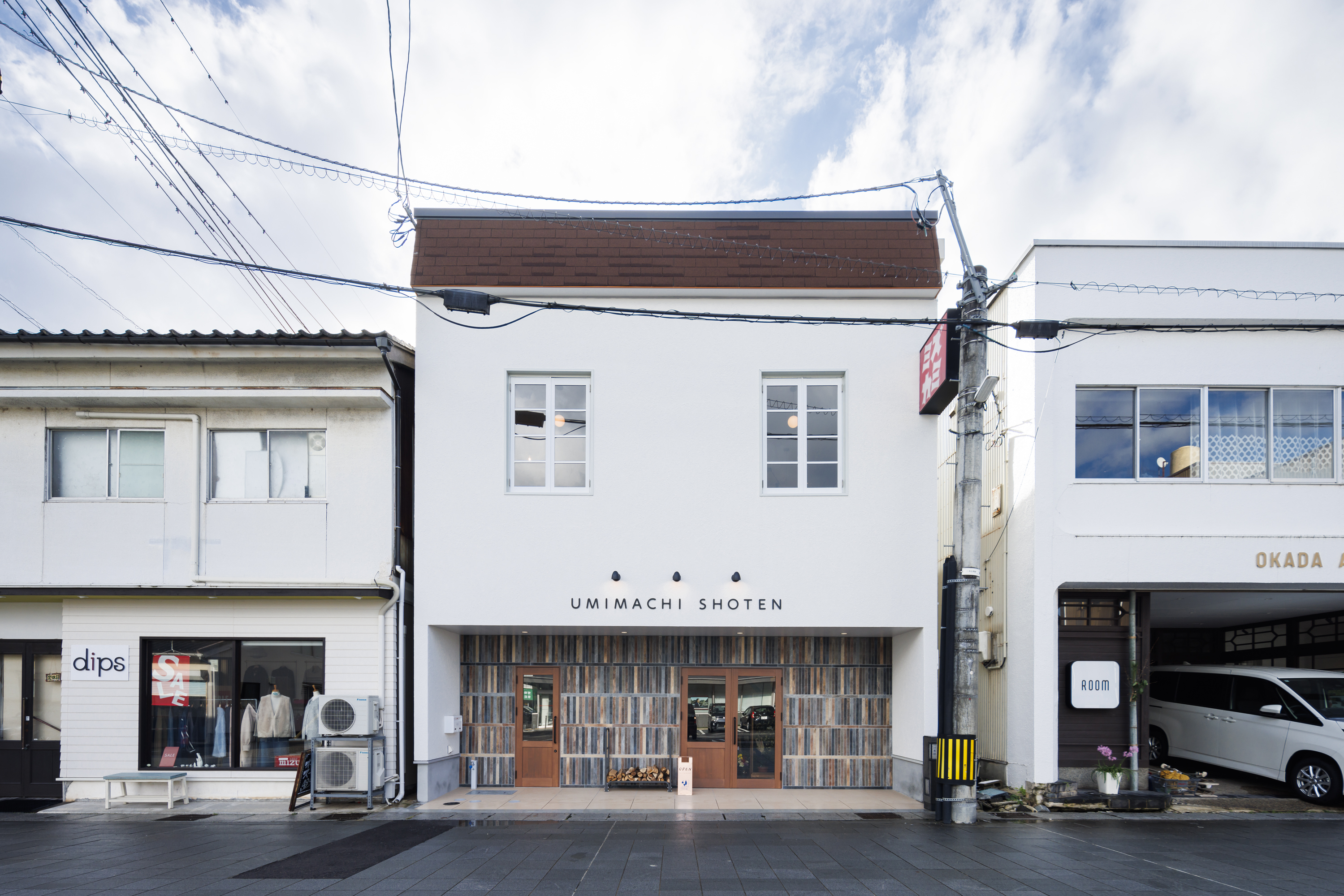
UMIMACHI SHOTEN

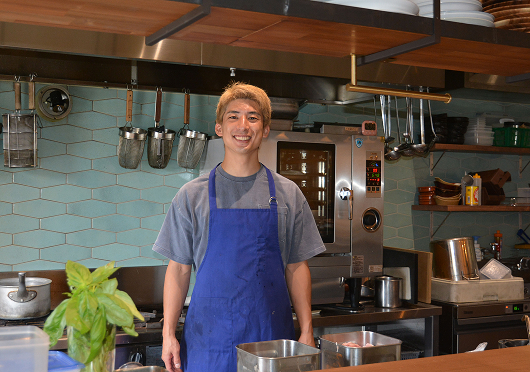
A casual, cozy restaurant where locals gather. Its name is “UMIMACHI SHOTEN (Store) .”  Rather than sounding like a restaurant, it has the charming feel of a retro grocery store in a peaceful seaside town. The owner, Mr. Hino, gained experience in the food and beverage industry. He told us that he intentionally included the word “shoten (store or shop)” in the restaurant’s name to reflect its location at the entrance to the historic Ipponsugi Shopping Street.

Originally from the Kanto region, Mr. Hino moved to Suzu on the Noto Peninsula and then to Iizuka in Fukuoka Prefecture, before feeling a strong desire to return to Noto. Through a series of fortunate circumstances, he decided to open his shop in Nanao. After the earthquake, he was introduced to a property on Ipponsugi Shopping Street through a friend, and he decided to relocate here.

The new shop building features a stylish contrast between the beautiful, deep-hued tile walls and the spacious “UMIMACHI SHOTEN” lettering arranged on a white background. However, when viewed from across the street, the building looks somewhat like a “face,” which is a bit humorous.

Mr. Hino enjoys connecting with the local community and hopes to bring happiness to those around him, even without offering anything particularly special. His words, “Since I don’t know how long I’ll be here, I want to cherish a way of life that involves taking the time and effort to care for others,” really stuck with me.

  • UMIMACHI SHOTEN (STORE)
  • UMIMACHI SHOTEN (STORE)
Shopping
Stay
Experience
Food
Sightseeing